It is a universally acknowledged fact, at least among those of us who love a good book, that Nigerian fiction is sad. If you read a lot, you don’t need a warning label.
You, a Gen Z reader, you know it, your parents know it, hell, even your grandparents, who were around for the classics, know it. It’s a pattern, a lifelong one that we have come to accept.

You cannot take away the trauma from a Nigerian book.
But have you ever stopped to wonder why? Why is Nigerian fiction actually so sad? Why can’t we indulge in escapism and enjoy good writing that doesn’t leave you with wet eyes and a knot in your throat?
Here’s what I think:
Why Is It Always So Sad?
To start off with, we have to bear in mind the history of Nigerian literature and its relation to our experiences of colonialism and, later, independence.
When African writers first began entering the global literary conversation, we were just gradually weaning ourselves from colonial rule and fighting for independence, gaining more attention around the world.
Western audiences still saw us as people in crisis who needed their help and were suffering in ignorance, and the books that came out during this era (the ’50s and ’60s) partly stoked that view.
From Things Fall Apart by Chinua Achebe to Efuru, The Palm-Wine Drinkard, and The Joys of Motherhood, these books, although groundbreaking for their time and deeply reflective of our beautiful cultural traditions, in a way, promoted notions of us as backward, unprogressive, and, more importantly, suffering.
It’s like the dilemma of Black joy in film.
Not enough films portray the African-American experience as light, happy, and heartwarming. Instead, it’s struggles and tragedy, things that, while extremely realistic, can get boring and hard to watch over time.
This is the problem with Nigerian fiction.
Read more: Thinking of Starting a Business? Here Are 6 Books Every Woman Should Read First
The books that got published, awarded, and exported during the first wave of Nigerian literature were the ones that confirmed what Western audiences already believed about Africa: that it was a continent in crisis.
These are great books, genuinely great, but they were also targeted to a market that had a very specific appetite: our struggle. These books delivered on it, reinforcing the notion that for a book to be regarded as a good “Nigerian story,” and more importantly, respected, it has to show suffering and pain.
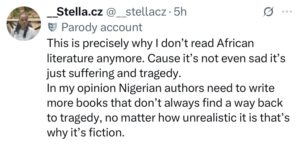
The second answer is in part related to the first, and it’s actually quite simple: because this is actually what life here looks like.
You cannot expect writers not to write about the things that are happening in front of them. Nigeria is hard. Being a woman, queer, or full of hope in a country that constantly asks more of you than it gives back is extremely hard, which is why even authors who have made lives for themselves in other countries cannot separate their works from being Nigerian.
It’s why we have writers like Chimamanda Ngozi Adichie, Chinelo Okparanta, and Chigozie Obioma, who live abroad, write books set in Nigeria, with Nigeria in mind, and for Nigerians. These books carry authentic sadness, and these writers don’t reach for trauma simply to appear literary.
It’s a part of us, this sadness that we cannot look away from, especially in our society, where it seems as if things are never going to get better, and the rights of minorities like women and queer people are still dire.
And Yet, This Is Why We Love Them
I remember reading Half of a Yellow Sun and instantly becoming obsessed.
As an Igbo child with strong roots in the east, the Biafran Civil War has always been a shadow in the history of my family. My grandparents were alive during it and had to flee for their lives. But whenever people brought it up, my grandparents refused to confront it, so I never learned anything about it.
Our curriculum also never dwelt on the history, focusing on Western events rather than our Nigerian ones. I knew more about the World Wars than about one that happened to my own family, and reading the book really helped me experience it firsthand.
Chimamanda’s writing is incredibly beautiful, and through it, I was able to immerse myself in the story so deeply that I could see what they went through. Without this book, I would never have experienced that, which is why I love Nigerian books so much. They tell our stories, the ones that matter most.
One thing I also love is that Nigerian fiction does not run from the truth. It’s real, honest, and gritty. For all the propaganda we consume every day, when it comes to experiences of being Nigerian, our books will not smooth the edges of an experience to make it more comfortable for you.
When you read these books, you see yourself and things you relate to. From the universal stubbornness of a Nigerian parent to the grief of a dream that almost made it, and how life can chew you up and spit you out so suddenly. You can never find this kind of realism in any other media. They reflect our lived experiences honestly and truly.
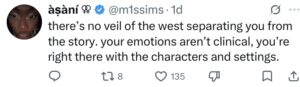
Another reason is the prose. I’m not exaggerating when I say that Nigerian books are the most beautifully written books I’ve ever had the privilege of reading. My Kindle is full of annotations and notes, and screenshots of beautiful sentences populate my gallery.
Nigerian writers have mastered the art of breaking your heart and fixing it back up with their words, and it’s a beautiful sight to witness. I have never been to Nsukka, but Chimamanda’s books have walked me through it so completely that I feel like I have. That is a piece of literature doing exactly what literature is supposed to do: move the reader.
And you can call Nigerian fiction sad, but you cannot dispute that it will move you.
Read more: Cozy Romance Books To Curl Up With This Season
As With All Things, There Will Be Exceptions
But sometimes, this sadness can become an excuse. There is a difference between a book that is heavy because the story demands it and one that is heavy because the writer decided trauma was the point. This phenomenon exists in general media, and it’s called trauma porn.
Over time, I’ve grown used to spotting books written to appeal to trauma and to milk readers’ emotions, and this trend is slowly entering mainstream Nigerian fiction.
My experience with these types of books started with A Little Life by Hanya Yanagihara, but in Nigerian fiction, the first that I can think of was Adanna by Adesuwa Oman Nwokedi. I love Adesuwa’s books; I’ll even be including them below in a list, but personally, this was a miss.
At some point, I actually stopped worrying about Adanna and started laughing at the absurdity of it all, because there was no way all this drama could be happening. The book did get its intended reaction; a lot of readers still reference it and say that it’s sad, but in my opinion, that was a classic case of trauma porn in Nigerian fiction.
If you want a list of books that actually give the heartache that comes with Nigerian fiction, I’ll be diving into them below.
My Top Sad Picks
If you want a good bout of depression, or a read that will make you not want to pick up any books for a while, here are some top picks:
- And Then He Sang a Lullaby by Ani Kayode Somtochukwu
- Half of a Yellow Sun by Chimamanda Ngozi Adichie
- The Death of Vivek Oji by Akwaeke Emezi
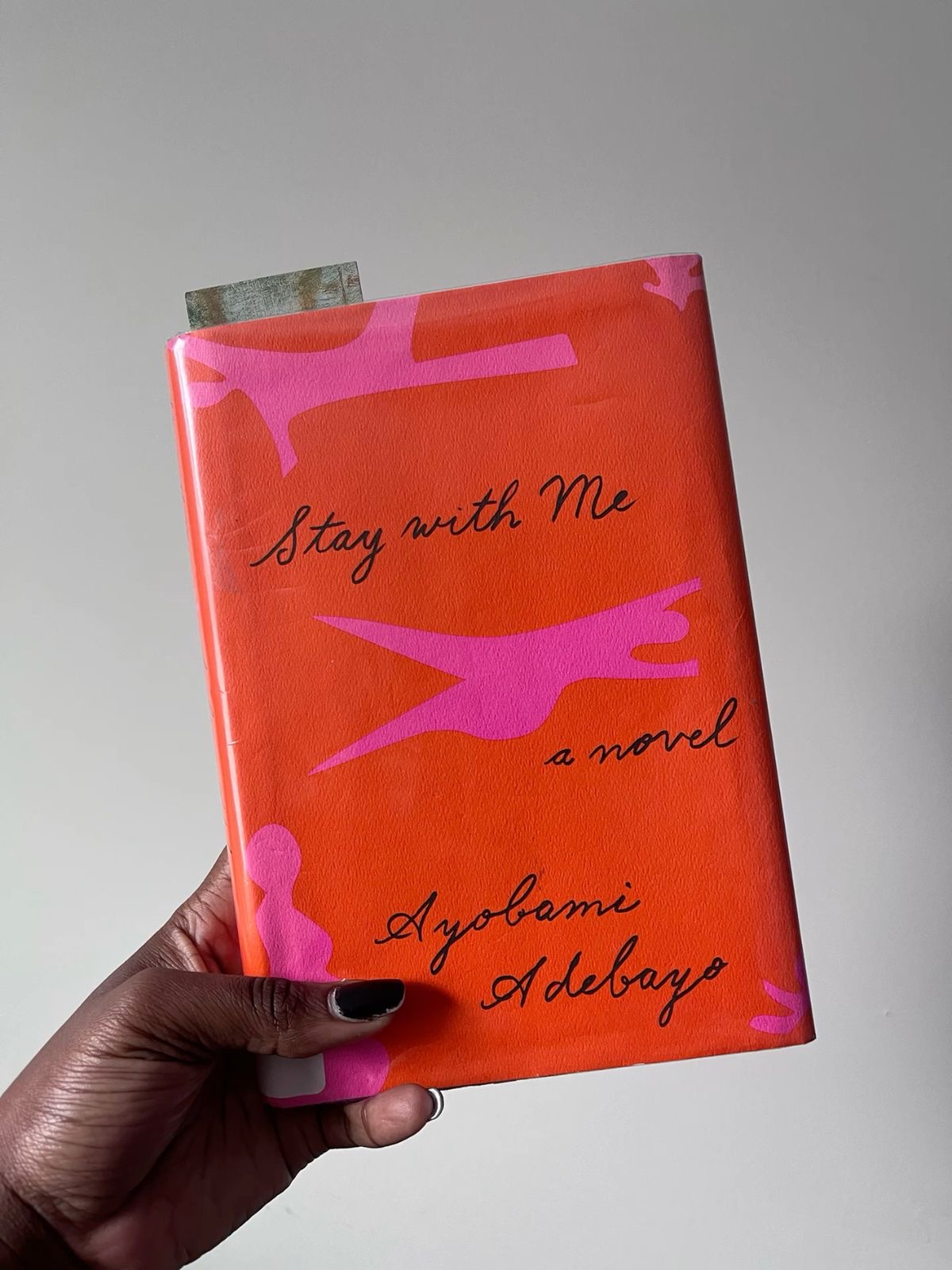
- A Spell of Good Things by Ayobami Adebayo
- The Fishermen by Chigozie Obioma
- The Joys of Motherhood by Buchi Emecheta
Trigger warning: These books all deal with death in some way, either that of family members, love interests, or friends.
My Top Light Picks
And if you’re unlike me (someone who dislikes trauma), and just want love and light, the kind of books that will leave you smiling and ready to move on to the next, here are some recommendations!
From romance to plain old comedy, here are some Nigerian books that won’t leave you with a hole in your chest:
- When Love Visits by Comfort Omovre
- The Mechanics of Yenagoa by Michael Afenfia
- Love in Color by Bolu Babalola
- Ginika’s Bridesmaid series by Adesuwa Oman Nwokedi
- The Secret Lives of Baba Segi’s Wives by Lola Shoneyin
- Nearly All the Men in Lagos Are Mad by Damilare Kuku
Read more: 8 Short Story Collections to Get You Out Of A Reading Slump
In conclusion, Nigerian fiction is not sad because its writers are broken or because they enjoy your suffering. It is sad because it was born of our reality, and the indisputable fact that living in this country is hard.
But that is not all, it is. Nigerian fiction is beautiful, engaging, and will sit with you long after you’re done, and now, it is slowly leaving the sad genre as more and more authors explore lighthearted romances and comedies.
To love Nigerian fiction is to hold all of these truths at once, and never stop reading.
Read more: 8 Short Story Collections to Get You Out Of A Reading Slump