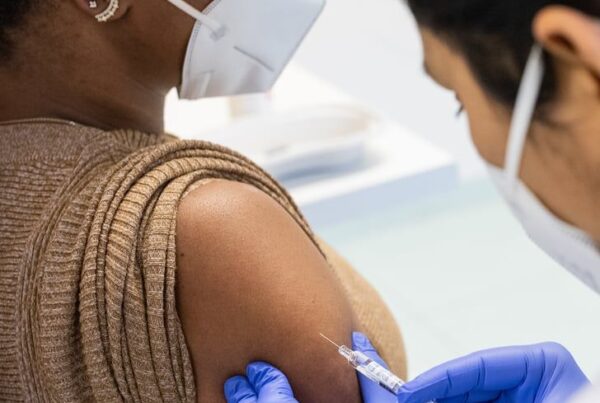
If you’ve ever sat in a doctor’s office, been handed a PCOS diagnosis, and walked out somehow more confused than when you walked in, this one’s for you
If you have PCOS, or suspect you might, there’s a very specific kind of tired that comes with it. Not just the fatigue, though yes, that too, but the exhaustion of being dismissed. Of sitting in a doctor’s office, describing everything going on with your body, and walking out with a vague diagnosis, a generic pamphlet, and the distinct feeling that nobody really listened.
Of being told your period being irregular is stress. That the hair on your chin is “just hormonal” or that the weight that won’t move no matter what you do is a you problem. That the anxiety, the low moods, the skin, all separate things, all manageable, all not that serious.
The issue with PCOS has often been that the name itself was not comprehensive or fully representative of the condition. Unfortunately, in a way, it has shaped how doctors view you, how you understand your own body, the solutions recommended, and how long it takes you to get answers that actually make sense.
Polycystic ovary syndrome (PCOS) has been officially renamed polyendocrine metabolic ovarian syndrome (PMOS). Confirmed in The Lancet on May 12, 2026, and backed by over 50 medical and patient organisations worldwide, this is one of the most significant reframings of a woman’s health condition in recent history. And no, it’s not just a letter swap.
 What was PCOS? What was PCOS getting Wrong?
 What was PCOS? What was PCOS getting Wrong?
The name “polycystic ovary syndrome” told a very specific story: cysts on your ovaries, ovaries acting up, problem located, case closed. Which is why so many women spent years cycling through doctors who kept looking at the ovaries and coming up short.
Here’s the frustrating part: the cysts the condition was named after aren’t even pathological cysts. They’re arrested follicles, follicles that didn’t fully develop or release an egg. Researchers have known this for years. The defining feature in the name was never technically a feature of the condition. The entire diagnostic framework was built around the wrong thing.
Which meant a lot of women spent years being told their irregular periods were stress, that the hair growing on their chin was just hormonal, that the weight that wouldn’t shift no matter what was a willpower issue, that the skin problems were diet-related, that the anxiety and the mood crashes were just life.
So what was actually happening? For women with PCOS, the real picture looks more like this:
- Irregular or absent periods
- Excess androgens (male hormones), which show up as acne, chin and body hair, or thinning hair on the scalp
- Insulin resistance, meaning the body produces insulin but doesn’t respond to it properly, which messes with weight, energy, and blood sugar
- Heightened risk of Type 2 diabetes and cardiovascular issues down the line
- Anxiety and depression, not as a response to dealing with the condition, but as a physiological feature of the hormonal imbalance itself.
The name reduced a complex, long-term hormonal disorder to a misunderstanding about cysts and an overt focus on ovaries, which contributed to missed diagnoses and inadequate treatment.
Up to 70% of people with PCOS were never diagnosed, and part of why is that the name sets the wrong expectations. Women who didn’t have cysts were dismissed. Women whose symptoms showed up as insulin resistance, or weight gain, or depression, or hair loss were told to come back when it got “bad enough.” The name was a door that kept many people out.
For the women who do eventually get a diagnosis, the average time from first symptoms to confirmed diagnosis is 2.5 years. One in three women waited more than two years. Nearly half (47%) had to see three or more healthcare providers before someone figured it out.
So What Does Polyendocrine Metabolic Ovarian Syndrome (PMOS) Actually Mean?
What the new name is really doing is saying: this is a whole-body condition. It always was. We just weren’t calling it that. So, let’s break the new name down.
Poly-endocrine: “Poly” means many, “endocrine” means hormonal. So right off the bat, the name recognises that the condition is underpinned by multiple interacting hormonal disturbances, including insulin, androgens, and neuroendocrine hormones, rather than being an isolated ovarian disorder.
Metabolic: This is the acknowledgement that what’s happening in your hormones has knock-on effects on your metabolism.
That is, what is happening hormonally has real downstream effects on metabolism. Insulin resistance. Cardiovascular risk. Blood sugar regulation. Weight management. These aren’t complications of PCOS; they are PCOS, and they deserve to be treated as such.
Ovarian: The ovaries still matter. Follicle development, ovulation, and hormones produced by the ovaries are part of the picture. The rename doesn’t erase the ovarian component; it just stops treating it like the only component.
Put it together, and you get a name that says this condition is hormonal, metabolic, involves the ovaries, and affects the whole body. Which is what it always was.
Read Also: What Stage Of Your Cycle Are You In? A Girl’s Guide To Understanding Your Body, Mood, And Energy
What Changes Now And What Doesn’t (Yet)
Thousands of women spent years. some of them their entire adult lives, describing a collection of symptoms that were real, documented, interconnected, and being told in various polite and impolite ways that they were overcomplicating something simple.
And part of the reason medical systems could get away with that is that the framework they were working from was incomplete. If it’s an ovarian problem, look at the ovaries. If the ovaries look fine, come back when they don’t.
So what has changed for women?
The honest answer is: the day-to-day changes will be gradual. Your doctor may still say PCOS by habit for a while. Medication packaging isn’t updating overnight. There’s a formal three-year transition period for clinical guidelines, medical education, and disease classification systems to adopt the new name consistently.
But the structural shift matters more than the timeline suggests. When a condition is accurately named, doctors look for the right things. They stop treating insulin resistance as an afterthought and dismissing mental health symptoms as separate from the hormonal picture. They stop measuring success only by whether your ovaries look better on an ultrasound.
More concretely, if you have been turned away because your ultrasound didn’t show cysts, the new diagnostic framework is more inclusive. If you have been told your symptoms aren’t “classic” PCOS, you now get the medical help you need.
When a condition is named accurately, doctors look for the right things and more women get diagnosed earlier. When more women get diagnosed earlier, they get treatment for all of what the condition is doing, not just the most visible symptom, not just the reproductive piece. Metabolic health gets monitored. Mental health gets taken seriously. Cardiovascular risk gets flagged before something goes wrong.
If You Were Diagnosed With PCOS or are living with this condition
Your diagnosis hasn’t changed. Your body hasn’t changed. But if your diagnosis always felt too small for what you were actually experiencing, if you kept describing things that didn’t quite fit the framework you were given, that’s not because you were wrong or exaggerating.
The framework wasn’t built big enough. It is now.
And if you’ve never been formally diagnosed but have been googling your symptoms for years, now might be the time to go back to a doctor with more specific requests. Ask about a fasting insulin test. Ask for a full androgen panel. If your periods are irregular, if you’re experiencing unexplained weight changes, if your skin and hair are doing things nobody can explain, you are allowed to push for answers. The name change gives you more language to do that with.
Your body was always the whole picture. Medicine just needed to catch up.